How to tell if a cable supports fast charging tips?

Time:2026-06-10 Author:Aria
0%

Understanding how to tell if a cable supports fast charging is crucial in today’s technology-driven world. Power delivery and speed are now essential for mobile users. According to Dr. Mia Chen, an expert in electrical engineering, “The quality of a charging cable can make or break your device's performance.” This statement highlights the importance of selecting the right cable.

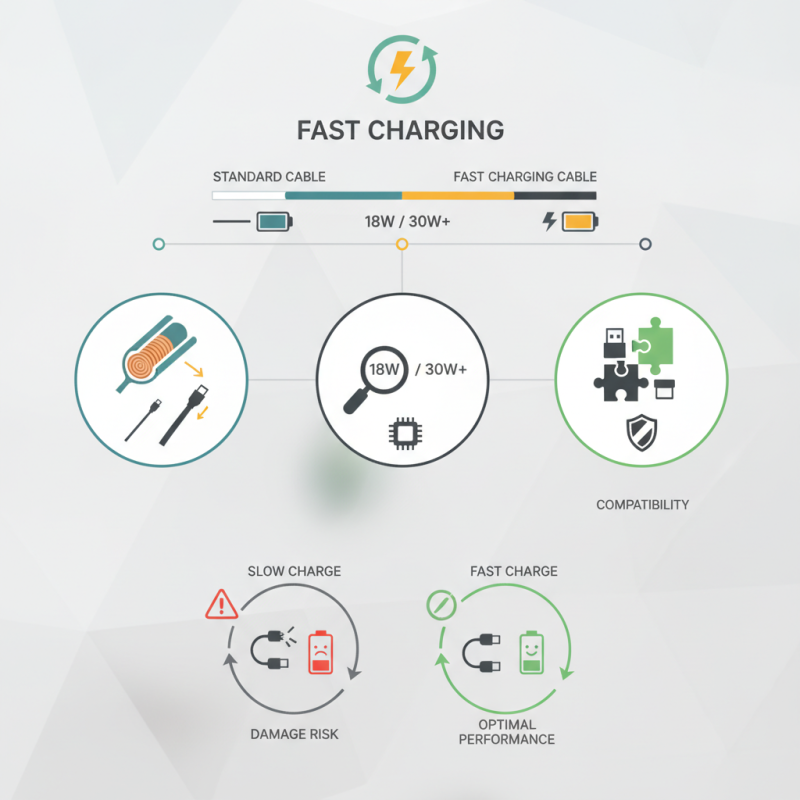
When assessing a cable’s fast charging capabilities, look for certain features. Thicker cables often contain more copper, allowing for higher current flow. Additionally, check the specifications. A cable rated for at least 18W or 30W is likely to support fast charging. Also, be wary of decoys; many cables appear robust but do not perform adequately.

Performance is essential, yet many consumers overlook this detail. A poor-quality cable can lead to slower charging times and potential damage to devices. Inspecting the connector type and ensuring compatibility with your charger enhances reliability. By knowing how to tell if a cable supports fast charging, you can make informed decisions and avoid common pitfalls.
How to tell if a cable supports fast charging tips?

Identifying Fast Charging Compatibility in Cables

When exploring fast charging compatibility in cables, look for specific features. Most fast charging cables will have a higher gauge wire. This means they can handle more current. Check the cable specifications for amperage ratings. Look for cables that support at least 2A for efficient charging.

You can also identify fast charging cables by examining the connectors. USB-C connectors are usually better for fast charging. Some lightning cables claim to support fast charging, but not all do. Be cautious of low-cost cables that promise fast charging. They might not deliver the required performance and could be unreliable.

Using a multimeter can help determine charging speed. Testing the current flow through the cable can provide insights. If the cable does not support the required amperage, it's a sign of incompatibility. Remember, not all cables that look similar perform the same. Always double-check the specifications before purchase. It’s important to reflect on the reliability of cheaper options. They often lack the necessary certifications for safe use.

Understanding Charging Standards and Protocols

When considering fast charging capabilities, the understanding of charging standards and protocols is crucial. USB Power Delivery (USB PD) and Qualcomm Quick Charge are two prevalent standards that ensure devices charge efficiently. A compatible cable will usually support at least one of these protocols.

Be cautious of non-certified cables. They may physically fit your device but not support fast charging. If you're unsure about a cable's specifications, check for the relevant symbols or ratings. Look for cables that indicate they are rated for high wattage, which is essential for fast charging.

Here are some tips to identify a suitable cable: Examine the specifications provided by the manufacturer. If a cable is labeled as "fast charging", it should clarify which standards it supports.
Additionally, consider the gauge of the wires inside the cable. Thicker wires typically allow for better current flow, enhancing charging speed.
Always double-check user reviews for real-world experiences.

Examining Cable Specifications and Ratings

When examining cable specifications for fast charging support, it's essential to look closely at several factors. The wire gauge is significant here. Thicker wires often handle higher currents better than thinner ones. A cable with a gauge of 24 AWG or lower is more likely to support fast charging.

Next, check the voltage rating. Most fast charging protocols require cables to handle at least 5 volts. However, some systems need 9 volts or even 12 volts. This is crucial for compatibility with various fast charging standards. Additionally, look for the current capacity mentioned in the specifications. A cable rated for 2.4A or higher typically supports faster charging speeds.

Don't overlook the materials used in the cable. High-quality materials can improve durability and conduct electricity more efficiently. Structures like braided nylon protect against fraying but won't necessarily indicate fast charging capability. There's a balance between aesthetics and performance that many users overlook. Remember, not all cables that look great will deliver optimal charging speeds.

How to Determine Fast Charging Support from Cable Specifications

Checking for Physical Features Indicating Fast Charging

When evaluating whether a cable supports fast charging, physical features can be quite telling. One of the first things to consider is the thickness of the cable. Thicker cables often indicate more power capacity. If a cable is flimsy, it may not be suitable for delivering higher voltages efficiently.

Inspecting the connectors is also essential. Look for a solid build and gold-plated connectors. These materials enhance conductivity. Additionally, check if the connectors fit snugly into devices. Loose connections can negatively affect charging speed.

Here are a few tips to aid your assessment. First, check the cable's specifications. Look for compatibility information. A cable labeled for high wattage is a good sign. Second, consider the cable length. A shorter cable might deliver faster charging due to less resistance. Last, research customer reviews. Real-world experiences can highlight issues not obvious in product descriptions. Pay attention to visuals as well; damaged or worn-out cables can lead to inefficiencies.

How to tell if a cable supports fast charging tips? - Checking for Physical Features Indicating Fast Charging

Cable Type Fast Charging Support Physical Features Maximum Output (W)
USB Type-C Yes Thicker gauge wires, USB-IF certification 100W
Micro USB Yes Reinforced connectors, thicker than standard 18W
Lightning Yes Apple certification, thicker cable 18W
USB-A No Standard gauge wires 12W

Testing Cable Performance with Devices and Chargers

When assessing whether a cable supports fast charging, it's essential to test its performance with various devices and chargers. Fast charging requires specific standards and capabilities. Not all cables are created equal. By conducting tests, you can gauge their effectiveness.

One method to test a cable is by using a multimeter. Measure the voltage and amperage during charging. A cable capable of fast charging should ideally maintain higher voltage levels while delivering significant current. This combination can provide quicker charging times. Consider the rating of the cable as well, typically denoted in amperes. A higher rating suggests a better chance of supporting fast charging.

Tips for testing cables include trying different devices. A cable may perform well with one smartphone but poorly with another model. Use reputable fast chargers to benchmark the cable’s performance consistently. Observe the cable's heat during charging; excessive heat may indicate inefficiency. Always conduct your tests in a safe environment to avoid potential hazards related to overheating.

FAQS

: What are common standards for fast charging?

: USB Power Delivery and Qualcomm Quick Charge are two popular standards for fast charging.

How can I ensure my cable supports fast charging?

Look for cables that indicate compatibility with fast charging standards and rated for high wattage.

What should I check on a cable's specifications?

Examine the wire gauge, voltage rating, and current capacity for fast charging support.

What wire gauge is ideal for fast charging cables?

Cables with a gauge of 24 AWG or lower generally support fast charging capabilities better.

How do materials affect cable performance?

High-quality materials improve durability and conductivity; aesthetics don’t guarantee performance.

Can I test a cable's fast charging capability?

Yes, you can use a multimeter to measure voltage and current during charging.

Why is current capacity important for cables?

Cables rated for 2.4A or higher are more likely to support faster charging speeds.

What should I observe while charging?

Excessive heat may indicate inefficiency, so monitor temperatures during use.

Why should I avoid non-certified cables?

They may fit, but often don’t support fast charging or meet safety standards.

Can a cable perform differently with various devices?

Yes, a cable may work well with one device while struggling with another.

Conclusion

When considering how to tell if a cable supports fast charging, it's essential to evaluate several key factors. First, identifying fast charging compatibility involves understanding the various charging standards and protocols that different cables may adhere to, such as USB Power Delivery or Qualcomm Quick Charge. Additionally, examining cable specifications and ratings can provide insights into their maximum power delivery capabilities and current handling.

Moreover, checking for physical features like thicker wires or specific markings can indicate a cable’s ability to support faster charging. Finally, testing the cable's performance with compatible devices and chargers is a practical way to confirm its efficiency. By following these guidelines, users can ensure they select the right cables for optimal charging speeds.

Aria

Aria

Aria is a dedicated marketing professional with a deep passion for innovative strategies and a keen understanding of our company's product offerings. With a wealth of experience in the industry, Aria excels at crafting engaging content that highlights the unique features and benefits of our......