 RF-Core Charger
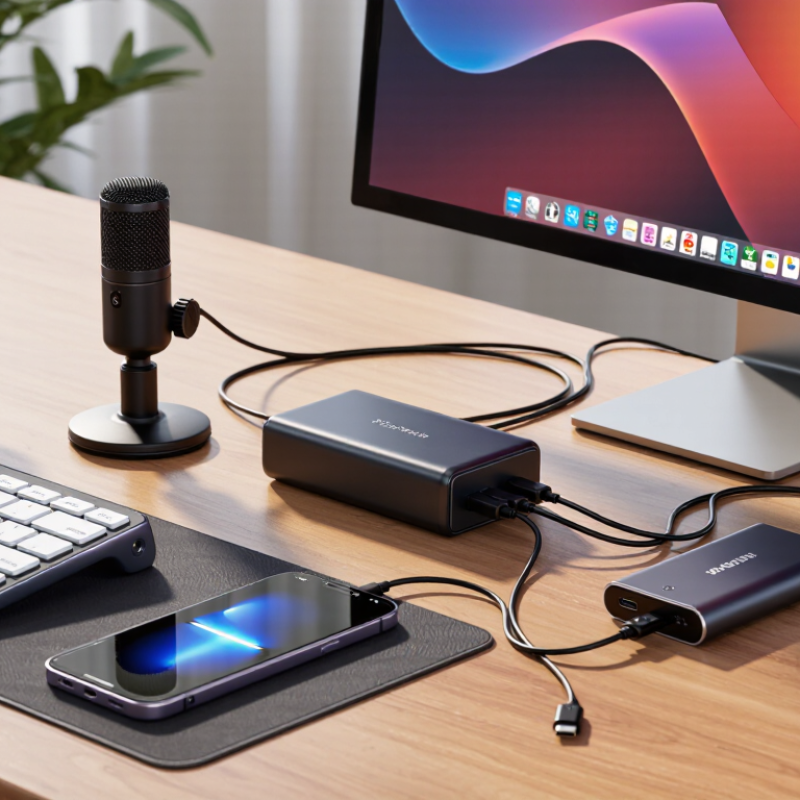
A powered USB hub adds practical space to a crowded desk. It connects several peripherals through one computer port. External power matters because the hub does not rely entirely on the computer’s limited USB output. A keyboard, mouse, webcam, storage drive, and desk light can work together more consistently.
The USB Implementers Forum states that USB 3.2 supports transfer rates of 5, 10, or 20 Gbps, depending on the implementation. That figure describes the interface, not every connected device. A slow drive will not become fast through a premium hub. I once overlooked this detail. The cable mattered more than expected.
USB Power Delivery 3.1 can negotiate up to 240 watts, according to the USB-IF specification. Most desk hubs use far less power, but this standard shows how USB power has developed. External power can reduce disconnects when several devices start simultaneously. It also helps maintain stable performance for high-demand storage and audio equipment.
Keep the hub within reach. Rear-mounted ports quickly become frustrating.
A short, well-labeled cable reduces clutter and accidental unplugging. IDC’s worldwide PC shipment reports show how essential connected computing remains, yet more ports do not automatically mean better organization. Port expansion should match real devices. Extra sockets can become another form of desk clutter. A powered hub is useful when stability matters more than simply adding connections.
