Effective cable management is crucial for any multi-device setup. Research indicates that 82% of individuals feel overwhelmed by cable clutter. A disorganized space can hinder productivity. Moreover, tangled cables pose safety risks, increasing the likelihood of accidents.
According to industry expert Jane Smith, "Proper cable management not only enhances aesthetics but also prolongs the lifespan of devices." This insight emphasizes the importance of organization in daily tech usage. Many users overlook the impact of unmanaged cables on their workspace.
To address these challenges, understanding how to manage cables for a multi-device station becomes essential. Utilizing cable trays, clips, and labeled cords can create an efficient environment. Thoughtful arrangements can minimize distractions and foster creativity. However, users often find themselves struggling with ongoing adjustments. Balancing functionality and aesthetics poses additional challenges. Thus, continuous improvement in cable management practices is necessary for an optimal setup.
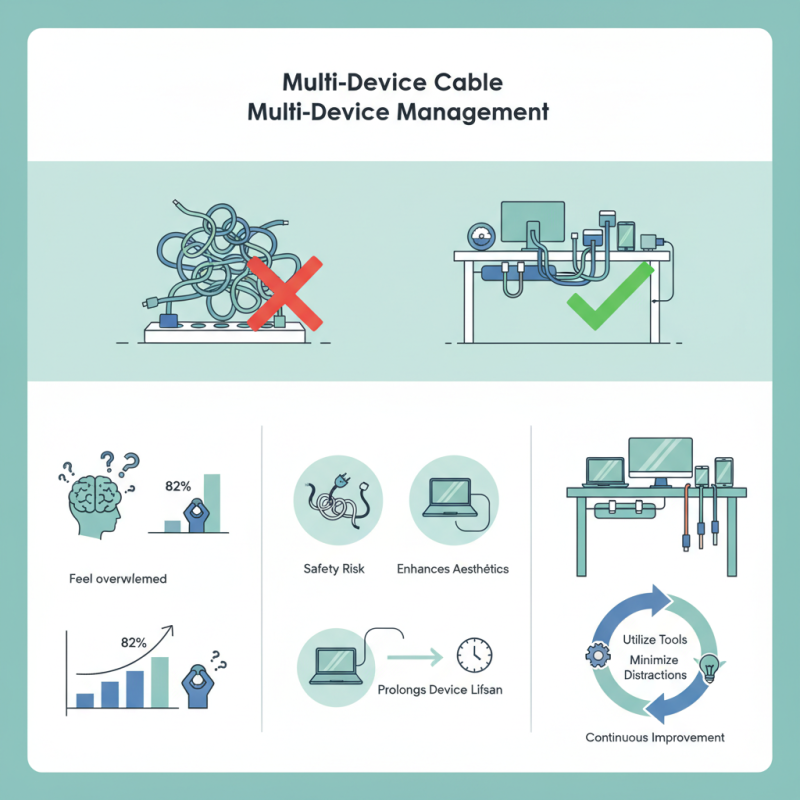
Effective cable management plays a crucial role in tech environments, particularly for setups with multiple devices. Chaos from tangled cables can lead to confusion and inefficiency. It not only disrupts workflow but can also pose safety hazards. Managing cables properly allows for easy access and reduces the chances of accidental disconnections, ensuring that everything runs smoothly.
In addition, a well-organized space enhances aesthetics. Devices look cleaner and more professional when cables are hidden or neatly arranged. However, many users overlook minor adjustments that could make a big difference. For instance, grouping cables by function can simplify troubleshooting, but not everyone takes this step seriously. Reflecting on these small changes can reveal a lot about our approach to organization.
Sometimes, we underestimate the impact of cable management on overall productivity. A cluttered desk can distract and stress us out. By dedicating time to organize cables, we not only improve our environment but also our mental clarity. Achieving a streamlined setup may require effort, but the rewards of efficiency and peace of mind are invaluable.
Poor cable management can lead to several issues in multi-device setups. A survey by the Cleanliness Institute found that tangled cords are a top frustration for users. About 70% of respondents reported difficulty in locating cables. This confusion often leads to unnecessary time wasted while trying to untangle or identify which cable belongs to which device.
Besides frustration, safety hazards multiply with messy cables. The National Fire Protection Association states that faulty or improperly managed cables can trigger electrical fires. Statistics indicate that around 30,000 home fires yearly originate from electrical failures. Moreover, damaged cables can result in costly device repairs, as exposed wiring can short-circuit devices. Investing in effective cable management solutions could significantly reduce these risks.
Lastly, poor cable organization can decrease productivity. A study from Ergonomics Today highlighted that cluttered workspaces reduce focus by up to 25%. When cables clutter a desk, they are not just an eyesore; they distract from tasks and reduce efficiency. Users often realize this only after experiencing dips in their workflow. Adopting better cable management practices offers a pathway to a more efficient and safer workspace.
A cluttered workspace can hinder productivity. Poor cable management is often overlooked yet crucial for a streamlined environment. Disorganized cables not only create visual chaos but can also lead to safety hazards. Tangled cords are prone to damage and can even become tripping hazards. Taking the time to manage these cables can significantly enhance your workspace.
Start by grouping cables according to their purpose. For instance, keep power cables separate from data cables. Use cable ties or clips to bundle them neatly. This reduces clutter and makes it easier to identify which cable belongs to which device. Labeling cables can save time and prevent frustrations during troubleshooting. Additionally, consider using a cable management box to hide unsightly cords.
Reflection on our setups often reveals room for improvement. You may notice areas where cables still gather dust or tangle. Regularly reassessing your cable organization practices is essential. This not only maintains tidiness but also ensures that your setup adapts to new devices or changes in your work habits. Effective cable management requires ongoing attention and a willingness to refine your system.
| Best Practice | Description | Benefits |
|---|---|---|
| Labeling Cables | Use labels or color codes to identify cables quickly. | Reduces confusion, speeds up troubleshooting. |
| Cable Ties or Velcro Straps | Use ties or straps to bundle cables together. | Prevents tangling and helps maintain organization. |
| Cable Management Box | Store excess cable length inside a dedicated box. | Keeps workspace tidy and out of sight. |
| Under-desk Cable Management | Use clips or trays to route cables under your desk. | Improves accessibility and aesthetics. |
| Regular Maintenance | Periodically review and tidy up cables. | Ensures that your setup remains organized over time. |
Effective cable management is essential in today’s multi-device setups. With the average household owning around 11 connected devices, managing their cables is more crucial than ever. Disorganized cables can lead to confusion, safety hazards, and increased maintenance work. According to a survey by the National Safety Council, nearly 25% of home fires are caused by electrical failures. This statistic underscores the importance of proper cable management.
Utilizing tools and accessories for cable management can streamline your workspace. Cable ties, clips, and sleeves help keep cords organized and reduce clutter. A study by the organization “Workplace Safety” found that well-organized workspaces can boost productivity by up to 20%. Additionally, using cable boxes and cable management trays can prevent tangling and damage. Having a dedicated space for cables not only improves aesthetics but also enhances safety.
However, many users overlook the need for regular maintenance. Cables can wear out or become frayed over time, leading to potential hazards. Regular inspection and replacement of damaged cables are key. Reflecting on these practices can lead to safer environments and a more effective workspace.
Effective cable management is often overlooked in multi-device setups. However, maintaining organized cables can significantly boost long-term efficiency and safety. According to a report by the National Fire Protection Association, faulty wiring is responsible for around 67,000 home fires annually. Disorganized cables can lead to tripping hazards and obstruct airflow to devices, increasing the risk of overheating.
Proper cable management begins with labeling. This strategy helps identify cables quickly. Industry studies suggest that a well-labelled and organized workspace can increase productivity by up to 20%. Using cable sleeves or clips keeps cables bundled together. A neat setup not only looks better but also allows for easier troubleshooting.
However, not everyone adheres to effective practices. Some individuals cram cables into drawers or let them lay untidy on floors. This can lead to damage over time. Regular maintenance and periodic checks are essential. By investing time in cable management, users create safer and more efficient environments.
: It reduces clutter and enhances productivity. Disorganized cables can create safety hazards and visual chaos.
Start by separating power cables from data cables. This makes identification easier and reduces tangling.
Use cable ties, clips, and sleeves. These accessories can keep cords organized and reduce clutter effectively.
Labeling cables helps in quickly identifying them. This saves time and prevents frustrations during troubleshooting.
Disorganized cables can lead to tripping hazards, electrical failures, and even increase the risk of fires.
Regular reassessments are essential. This ensures that your setup adapts to new devices and maintains tidiness.
Cables can wear out or become frayed. This may lead to safety hazards if not inspected and replaced regularly.
No, it also enhances safety and keeps devices functioning properly. A clutter-free space can improve focus.
Many people cram cables into drawers or leave them untidy. This can cause damage over time and create hazards.
A well-organized workspace can increase productivity by up to 20%. It creates a more efficient and pleasant working environment.
Effective cable management is crucial for optimizing a multi-device setup, as it enhances both functionality and aesthetic appeal in a tech environment. Poorly managed cables can lead to a myriad of issues, including tangling, hazards, and decreased productivity. To ensure a smooth workflow, it is essential to understand how to manage cables for a multi-device station by implementing best practices such as labeling, using cable ties, and adopting cable trays or clips.
Additionally, investing in tools and accessories tailored for cable organization can significantly improve efficiency and safety in your workspace. Regular maintenance of your cable management system is also vital for ensuring long-term performance, preventing wear and tear, and minimizing risks related to electrical hazards. By prioritizing cable management, users can create a more organized and enjoyable tech experience.

RF-Core Charger