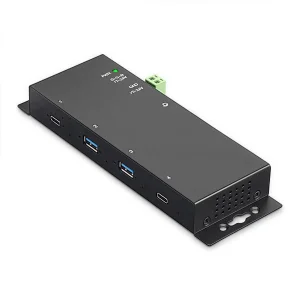
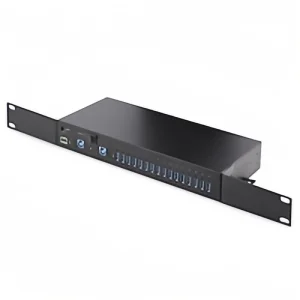
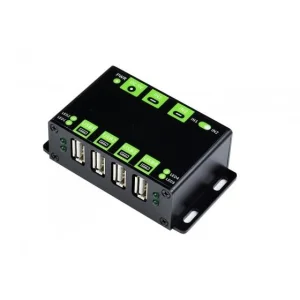
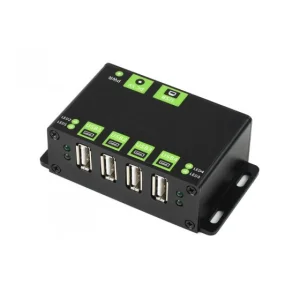
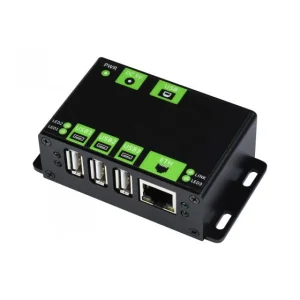
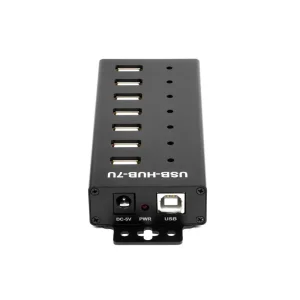
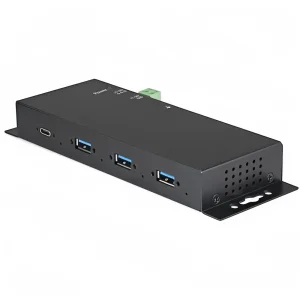
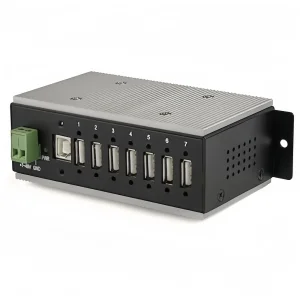
Engineered for high density, dynamic ESD grounding, and heavy duty environment resiliency.
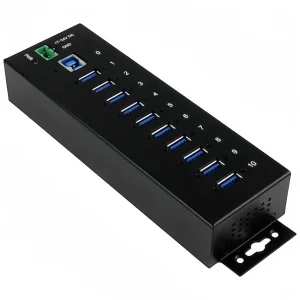
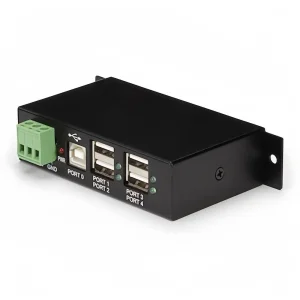
Equatorial Guinea, located on the west coast of Central Africa, is undergoing a pivotal digital transformation. Driven by its capital city, Malabo (situated on Bioko Island), and the major mainland port city of Bata, the nation is actively diversifying its economy. Central to this economic evolution is the integration of advanced ICT infrastructure across oil and gas platforms, public administration networks, maritime logistics, and telecommunications towers.
Unlike consumer environments, Equatorial Guinea's primary industries demand ruggedized hardware. The offshore drilling installations in the Gulf of Guinea operate under harsh atmospheric conditions. Salt-laden air, extreme humidity (often exceeding 90% relative humidity), and high temperatures speed up corrosion and increase the risk of electrical short circuits. Consequently, standard plastic USB hubs are wholly inadequate. Corporate IT networks, maritime fleets, and industrial systems require heavy-duty, rack-mounted USB hubs encased in steel or IP-rated enclosures.
Furthermore, the national electrical grid in developing urban zones like Djibloho and Oyala is subject to voltage fluctuations and power surges. Without integrated protection circuits, sensitive peripheral devices like data loggers, telecommunication receivers, and industrial control systems are vulnerable to catastrophic failure. Shenzhen RF-Core Charger Co., Ltd. addresses these pain points by offering industrial-grade USB connectivity products with built-in ESD and surge protection up to 350W, safeguarding critical B2B equipment in Central Africa.
Worldwide, B2B procurement of rack-mounted USB hubs is rising. The growth is fueled by the expansion of edge computing, smart warehousing, automated testing lines, and IoT-driven factories. Industrial installations no longer treat USB hubs as simple extension boards. Modern hubs are sophisticated data routers and power management systems.
A major trend in the global market is the shift toward managed USB hubs. These systems let network administrators monitor, enable, or disable individual USB ports remotely. They also allow for power cycling on connected peripherals through command-line interfaces (CLI) or API integrations. This feature is highly valuable for remote installations like weather stations, offshore rigs, and telecom masts. In these settings, physically disconnecting a crashed device is costly and difficult.
| Feature / Metric | Consumer-Grade USB Hubs | Industrial Rack-Mounted Hubs | Operational Impact |
|---|---|---|---|
| Chassis Material | ABS Plastic / Thin Aluminum | SECC Steel / Heavy-Duty Alloy | Durability, physical protection, and heat dissipation. |
| ESD Protection | None / Basic level | ±15kV Air, ±8kV Contact Isolation | Prevents electrostatic damage to host controllers. |
| Mounting Options | Loose / Desktop only | 1U Rackmount, DIN Rail, Wallmount | Saves space and secures cabling in server cabinets. |
| Power Architecture | Shared USB bus power | External Terminal Block 9V-36V DC | Guarantees stable current for high-draw peripherals. |
Additionally, standardizing high-speed transmission (such as USB 3.2 Gen 2 and Type-C topologies yielding up to 10Gbps bandwidth) ensures that video feeds, telemetry logs, and high-frequency communication links can flow without bottlenecks. In remote areas like Equatorial Guinea's coastal installations, this bandwidth facilitates real-time data sync with cloud architectures across global networks.
As an established high-tech manufacturer, Shenzhen RF-Core Charger Co., Ltd. integrates research and development, fabrication, and international sales to deliver premium industrial solutions. Over years of development, we have created an efficient, vertically integrated manufacturing process. This allows us to supply global markets, including Equatorial Guinea, with high-density, reliable connectivity equipment.

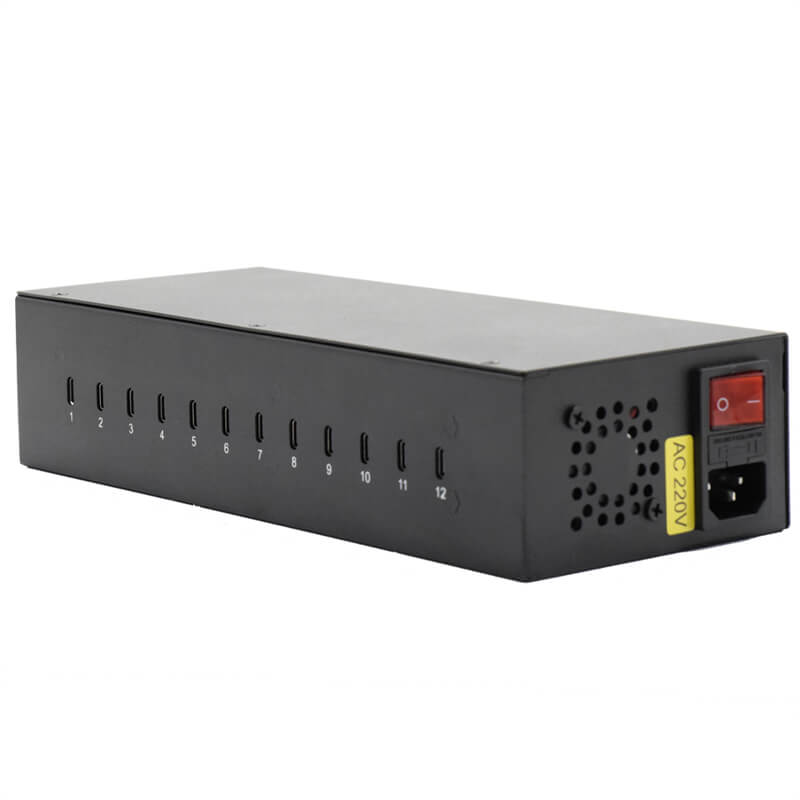
RF-Core specializes in multi-port charging technology and industrial data transmission. Our product lineup includes 10–100 port high-density charging cabinets, industrial USB hubs, and high-power fast charging units. This comprehensive range enables us to support infrastructure developers, IT service providers, and administrative agencies in Bata and Malabo. Our solutions are designed to keep complex device matrices operational 24/7.
Our manufacturing facilities in Shenzhen feature automated assembly lines, surface mount technology (SMT) machines, and dedicated QA laboratories. Every rack-mounted USB hub undergoes rigorous testing, including burn-in thermal chambers, ESD resistance evaluations, and simulated data integrity runs. These processes ensure compliance with international quality standards.
Our in-house R&D engineering team offers OEM/ODM services. We can customize enclosures, modify port layouts, design wide-voltage DC inputs (such as 9-36V DC terminal blocks), and add specific mounting tabs. This flexibility ensures our B2B customers receive hardware tailored to the environmental demands of their projects in Central Africa.
Industrial USB hubs are crucial components across multiple sectors in Equatorial Guinea. Here are key scenarios where our ruggedized hardware supports local infrastructure:
Providing robust connection points for seismic sensors, telemetry units, and marine diagnostic tools on rigs off Bioko Island. Features 350W surge protection to handle sea spray static and engine room power surges.
Supporting administrative agencies in Malabo II and Bata. High-density, rack-mounted USB hubs manage secure document scanners, biometric readers, and security credential readers with zero signal dropouts.
Powering and synchronizing student tablets and hardware kits in training facilities, schools, and civic learning centers. Ensures stable power delivery and prevents electrical hazards during multi-device use.
By standardizing on rack-mounted metal hubs, IT managers can organize cables within standard 19-inch cabinets. This reduces clutter, optimizes airflow, and prevents accidental disconnects that lead to downtime in crucial logistics and telecommunications hubs.
Choose from multi-port configurations, dual-host units, and surge-protected industrial controllers.
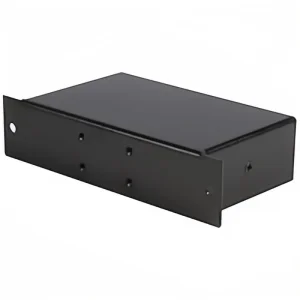
Procuring IT infrastructure for deployment in Equatorial Guinea requires a clear strategy. To ensure network longevity, procurement managers should evaluate the following hardware specifications before issuing requests for proposals (RFPs):
1. Enclosure Build and Physical Footprint: Insist on SECC steel chassis design. A steel housing provides structural rigidity, EMI shielding, and resists corrosion in humid coastal regions like Bata and Malabo.
2. Power Input Flexibility: Industrial cabinets use centralized DC power rings (e.g., 9V-36V). Choosing hubs with screw-lock terminal blocks, rather than standard barrel jacks, helps prevent power cable disconnects caused by cabinet vibration.
3. Overcurrent and Transient Protection: Ensure the hub specifications list at least ±15kV air-gap ESD protection and 350W surge protection per port. This prevents power surges from traveling through the hub and damaging expensive host controllers.
4. Managed vs. Unmanaged Hubs: For remote telecom towers or offshore platforms, select managed USB hubs. These units allow engineers to remotely cycle power to frozen devices, avoiding the need for costly on-site support visits.
The industrial connectivity landscape is shifting toward Type-C unification. With the European Union and global markets standardizing on Type-C interfaces, industrial systems are following. Shenzhen RF-Core Charger Co., Ltd. is leading this transition by integrating dynamic Power Delivery (PD) protocols into our rack-mounted USB-C chassis.
Additionally, USB4 and Thunderbolt protocols are moving into industrial field testing. These technologies offer transmission speeds up to 40Gbps. This bandwidth allows developers to connect multiple high-definition surveillance cameras, high-speed telemetry lines, and display interfaces through a single consolidated host cable, simplifying network topologies on offshore vessels and industrial facilities.
Finally, smart green grids are driving the development of energy-efficient charging stations. RF-Core is addressing this demand by incorporating intelligent power distribution algorithms. Our systems dynamically allocate wattage based on the connected device's battery level and real-time power draw. This limits idle power waste and reduces energy consumption in remote solar-powered telecom stations across Bioko and Annobón.
Essential questions and answers regarding shipping, specifications, and customization options for B2B buyers in Equatorial Guinea.
Get in touch with Shenzhen RF-Core Charger Co., Ltd. for custom OEM/ODM designs, wholesale pricing, and technical datasheets.
 RF-Core Charger