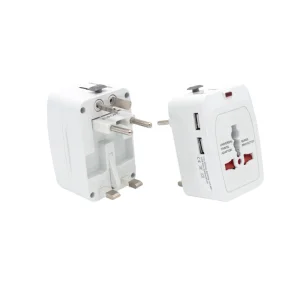
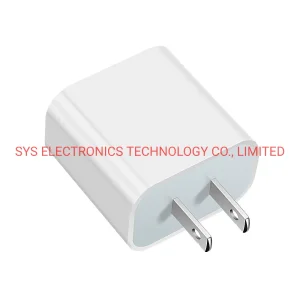
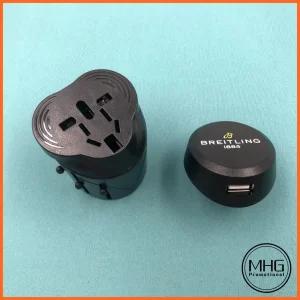
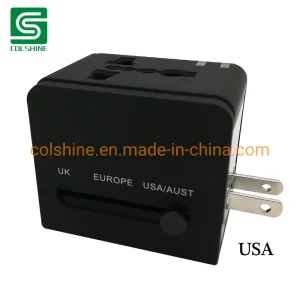
Engineered for voltage compliance across the Gilbert, Line, and Phoenix Islands, these systems feature advanced safety matrices to counter grid fluctuation.
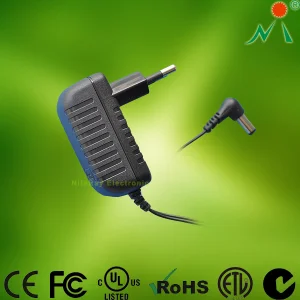
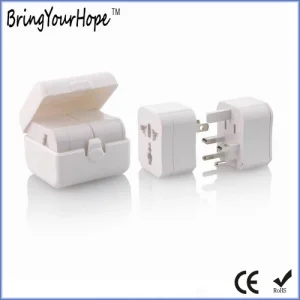
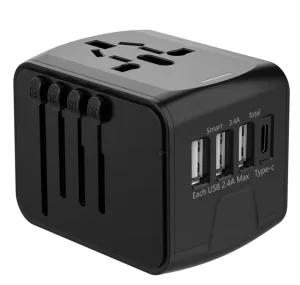
Developing and deploying universal travel adapters for the Republic of Kiribati requires a deep understanding of Oceania's unique geographic and electrical landscape. Comprising 32 atolls and one raised coral island, Kiribati’s geographic fragmentation (divided into the Gilbert Islands, Line Islands, and Phoenix Islands) introduces massive grid distribution variations.
The Grid Baseline & Voltage Profiles: Kiribati standard mains power operates at 240V AC at a frequency of 50Hz. The official plug standard is Type I (AS/NZS 3112), shared with Australia and New Zealand. B2B buyers procuring for local administrative hubs, government buildings, and educational campuses in South Tarawa, or eco-tourism networks on Kiritimati (Christmas Island), must source adapters that are highly resilient to standard grid fluctuation and extreme environmental stressors.
The Salinity and Humidity Risk Vector: The equatorial marine environment of Kiribati poses an aggressive corrosion risk. High air salinity, paired with relative humidity frequently exceeding 80%, accelerates galvanic corrosion on internal contact metals. To combat this, premium adapters manufactured by Shenzhen RF-Core utilize nickel-plated phosphor bronze pins rather than standard brass, extending contact lifetimes by up to 300% under high-salinity exposures.
Tourism and Commercialization Shifts: As international business travel and sustainable eco-tourism expand, major hotel projects and marine operations require adapters that integrate not just basic mechanical plug conversion, but also intelligent power conversion (transformer-level robustness for multi-voltage devices) to prevent catastrophic failure of foreign travelers' electronics.
In the global commercial landscape, power solutions have transitioned from simple mechanical physical adapters to integrated smart-power hubs. Global supply chains mandate that manufacturers provide dual-path designs that accommodate both low-power consumer electronics and high-demand commercial hardware.
Corporate offices, marine transport centers, and research installations are phasing out single-port chargers in favor of centralized, high-density hubs. Modern business travelers pack multiple USB-PD (Power Delivery) compliant devices—laptops, tablets, smartphones, and instrumentation gear. A single universal adapter must serve as a multiport hub to reduce physical transport weight and packaging costs.
How next-generation semiconductor physics and thermal engineering are defining the future of commercial travel adapters.
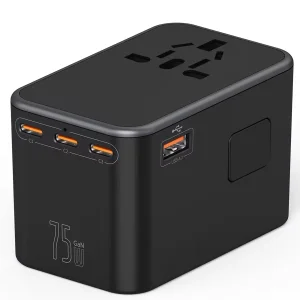
Traditional silicon-based adapters suffer from high thermal losses, leading to bulky housings and lower power densities. By transitioning to Gallium Nitride (GaN) technology, our factories achieve faster switching rates with up to 95% efficiency. This allows us to pack a 75W Power Delivery system into a pocket-sized travel adapter suitable for executive travel in Kiribati.
Using microcontroller units (MCUs), our modern adapters negotiate power handshakes with connected endpoints. When a user connects a smartphone alongside a USB-C laptop, the adapter dynamically throttles power profiles (e.g., splitting a 65W total budget into 45W for the laptop and 20W for the phone) to prevent overload and thermal spikes.
Kiribati's reliance on localized diesel microgrids means voltage spikes are common. Our factory designs implement a multi-layered protection matrix: Over-Voltage Protection (OVP), Over-Current Protection (OCP), Short-Circuit Protection (SCP), and Over-Temperature Protection (OTP). The external enclosures are molded from V-0 grade flame-retardant Polycarbonate (PC) to meet strict international fire safety regulations.
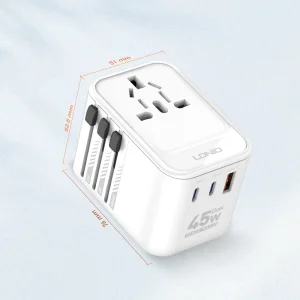
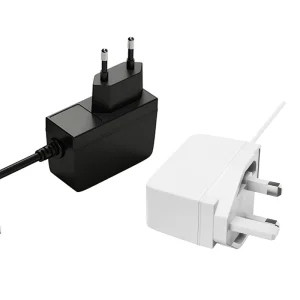
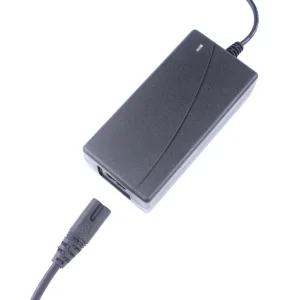
Below is our complete selection of universal charging stations, AC/DC converters, and multi-port travel solutions tailored for marine, commercial, and tourism infrastructure projects.
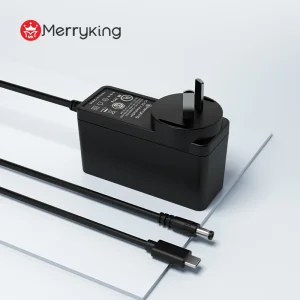
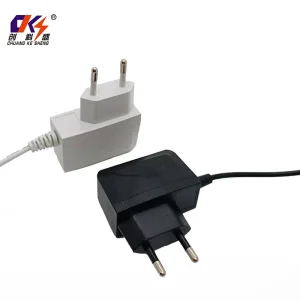
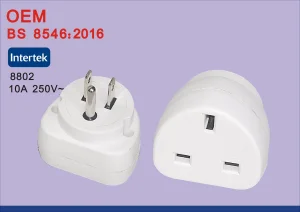
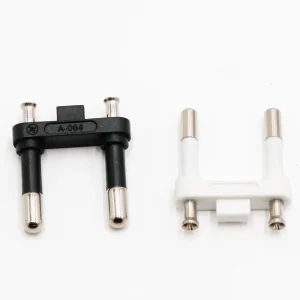
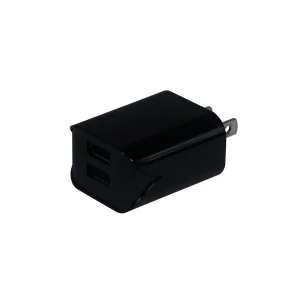
Shenzhen RF-Core Charger Co., Ltd. is a high-tech enterprise integrating research and development, manufacturing, and global sales, specializing in advanced charging and connectivity solutions for modern digital devices.

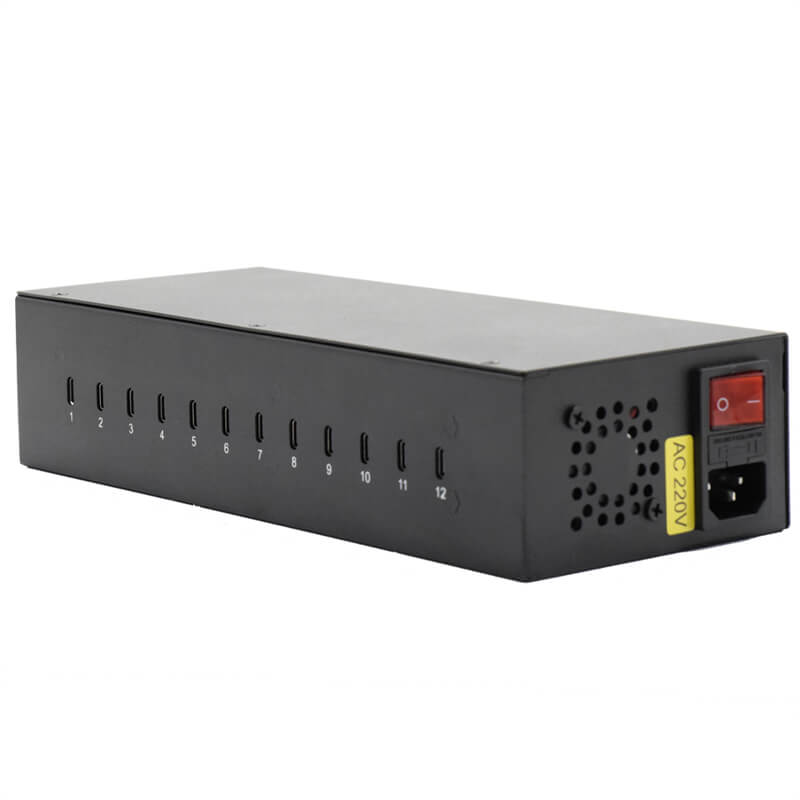
The company focuses on the innovation of multi-port charging technology, offering a comprehensive product range including 10–100 port high-density chargers, intelligent charging cabinets, USB hubs, and high-power fast charging systems. RF-Core is particularly recognized for its expertise in large-scale centralized charging solutions, designed to efficiently support environments where multiple devices need to be charged simultaneously.
Guided by the philosophy of efficiency, reliability, and innovation, RF-Core develops products that deliver faster charging speeds, stable performance, intelligent power distribution, and enhanced safety protection. Its solutions are widely compatible with smartphones, tablets, laptops, and various smart terminals, meeting the evolving demands of digital lifestyles and professional applications.
A key competitive advantage of RF-Core lies in its strong R&D capability and full-process service system. Supported by an experienced engineering team, the company provides one-stop OEM/ODM solutions, covering industrial design, hardware and software development, prototyping, testing, and mass production. This enables customers to achieve faster product development cycles and flexible customization based on specific project requirements.
The company strictly adheres to international quality standards and has obtained multiple certifications, including CCC (3C), ISO9001, FCC, CE, and RoHS, ensuring that all products meet global safety, environmental, and performance requirements.
RF-Core’s products are widely used across various sectors such as education, hospitality, government institutions, corporate offices, transportation hubs, and public service facilities. They are especially suitable for scenarios involving high-density device usage, such as classrooms, training centers, exhibitions, and shared workspaces.
In addition, RF-Core continuously invests in advanced manufacturing equipment, automated production lines, and rigorous quality control systems to ensure product consistency and reliability. The company is also committed to sustainable development, actively promoting energy-efficient technologies and environmentally friendly materials in its product design and manufacturing processes.
RF-Core Charger — Empowering the future with intelligent power.
Oceanic Customs & Certification Pathways: For distributors and government buyers importing electrical hardware into Kiribati, adherence to the Pacific Island Association of Non-Governmental Organisations (PIANGO) and Pacific community safety guidelines is paramount. Because Kiribati leverages plug patterns congruent with standard Australian specifications, all imported universal travel adapters must strictly align with SAA approvals (AS/NZS 3112:2018).
Direct Supply-Chain Routing from Shenzhen Port: Shenzhen RF-Core minimizes transshipment delays to Oceania by utilizing optimized shipping routes departing from Shenzhen and Guangzhou ports. We offer customized packaging configured to prevent maritime moisture intake, featuring dry-pack desiccant units and double-walled moisture-barrier master cartons. Our logistic network handles customs clearance processes, ensuring rapid delivery times to South Tarawa Port and Christmas Island.
Customization Parameters for Hotel Chains & Telecoms: We provide full OEM branding services. B2B buyers can request custom silk-screen logos, laser-etched port ratings, and modified circuit configurations designed to operate reliably with specific regional solar inverter arrays common in outer island mini-grid installations.
Kiribati standardizes on the Type I plug format (conforming to the AS/NZS 3112 Australian standard), operating on 240V AC at 50Hz. RF-Core travel adapters feature multi-prong configurations that support Type I alongside global plugs (EU, US, UK) to allow foreign hardware to interface seamlessly with local sockets.
We use premium alloys, notably nickel-plated phosphor bronze, for our internal electrical contacts. This formulation provides high resistance to oxidation and corrosion from salt-spray, ensuring stable electrical conductivity over years of use in tropical island environments.
Yes. RF-Core products are fully certified under SAA, CE, FCC, RoHS, and CCC parameters. Upon request, we provide our B2B clients with laboratory test sheets and certification documents required for clearance by customs departments in Tarawa.
Typical production for OEM orders ranges between 20 to 30 days depending on personalization complexity. Shipping via sea freight from Shenzhen to Tarawa Port generally takes 25 to 35 days, including transshipment routing in major Pacific hubs like Fiji or Australia.
Yes, our premium travel adapters feature GaN technology integrated with USB-C Power Delivery, outputting up to 75W (and customized up to 100W+), allowing travelers and field operators to fast-charge high-demand laptops like MacBook Pros and Lenovo ThinkPads without separate power bricks.
Contact our technical engineering team today to receive direct pricing quotes, request custom ODM prototypes, or obtain safety compliance dossiers.
 RF-Core Charger